 Lifetime Authenticity Guarantee

The WW1 British BEF Caltrop is an original example of the anti-personnel devices employed by the British Expeditionary Force during the First World War. Designed with four sharp steel spikes, the caltrop ensured that one point always faced upwards when deployed. These devices were scattered across roads, trails, and likely routes of enemy advancement to impede foot soldiers, cavalry, and vehicles. Caltrops served as a passive defensive measure, creating hazards for advancing troops and damaging tires or hooves. Manufacture typically involved forged or welded steel, resulting in a robust, corrosion-resistant device suitable for rugged field conditions. Measuring approximately 3–5 cm across, these caltrops were compact and easily concealed in the terrain. They are significant as early examples of anti-vehicle and anti-personnel obstacles, reflecting the evolving tactics of warfare during World War I. The use of caltrops persisted in various forms throughout the 20th century.
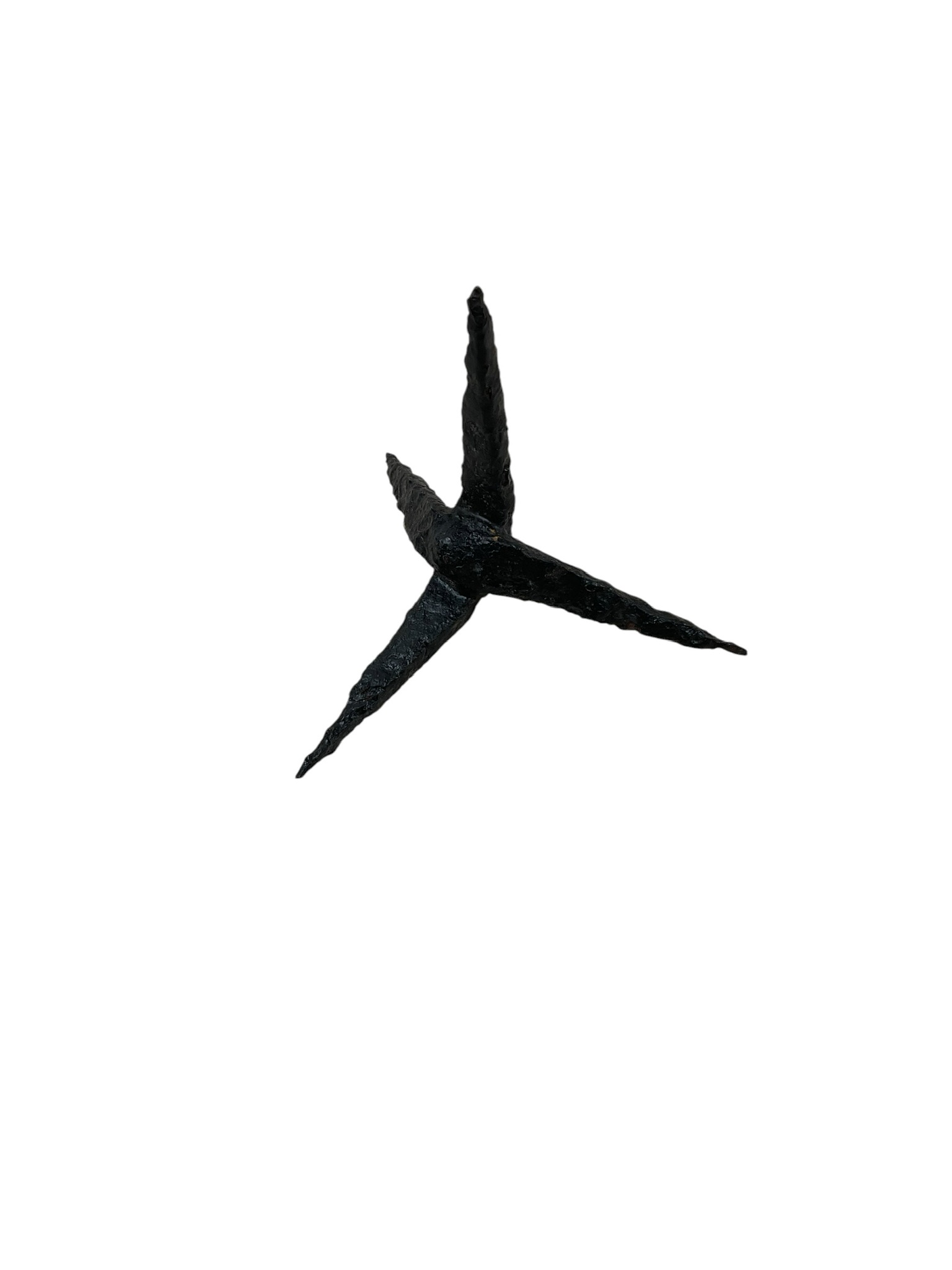
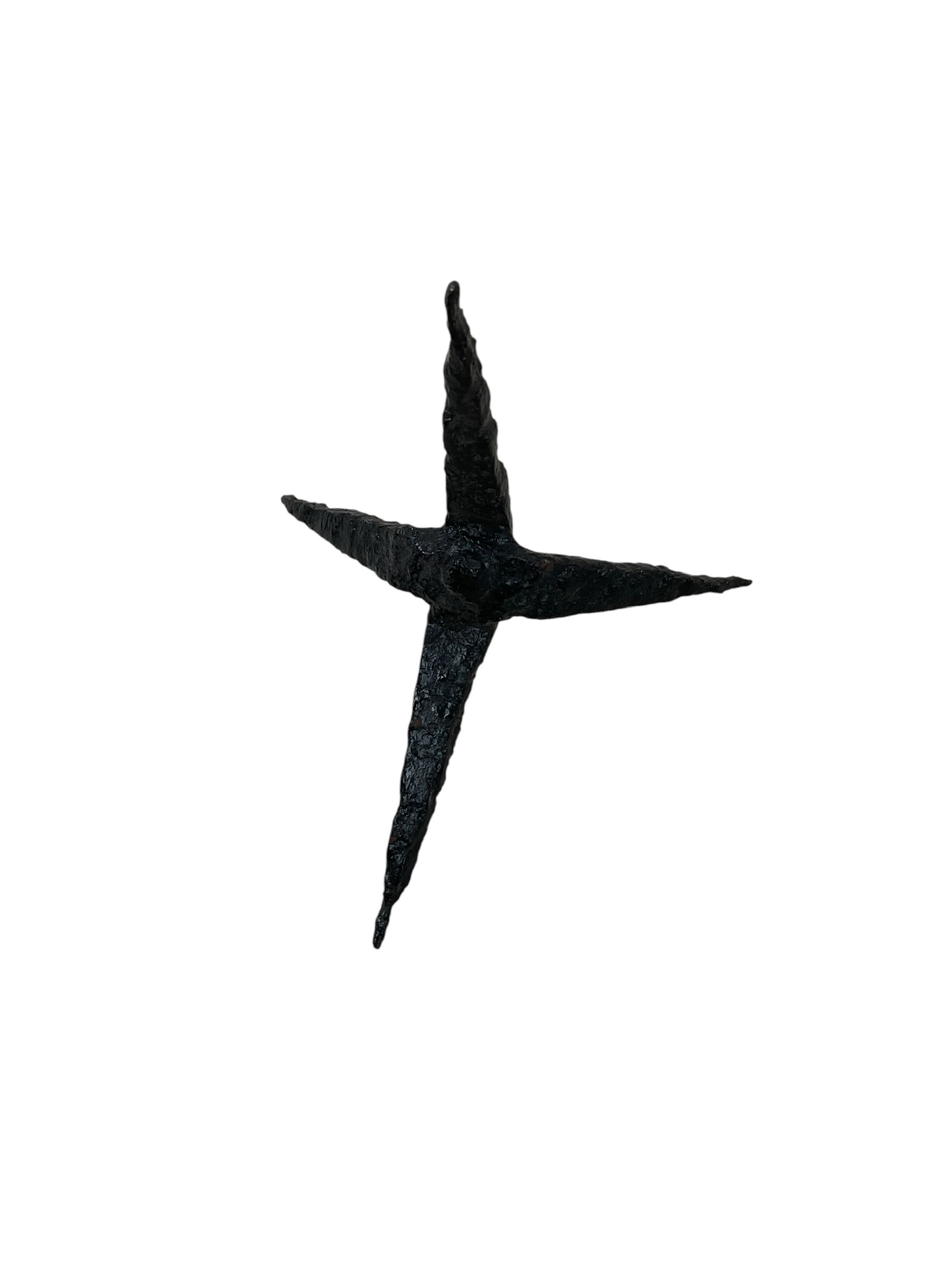
WW1 British BEF Caltrop (2)
$75.00
Availability: Only 1 left in stock
Related products
-
WW1 Militaria
WW1 British Canadian Officers Canteen Flask With P08 Web Carrier 1918 Dated
$250.00 Add to cart -
WW1 Militaria
WW1 British BEF Rifle Skill At Arms Speciality Trade Patch Insignia
$75.00 Add to cart -
WW1 Badges & Patches
WW1 Canadian British BEF CEF Pioneer Speciality Trade Patch Insignia
$75.00 Add to cart


